
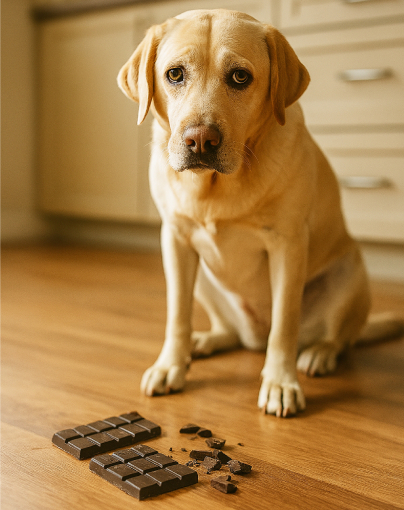
Although chocolate is a sweet treat for humans, it can be harmful to dogs—even in small amounts. If your pup has eaten chocolate (or you suspect they have), it’s critical to act fast.
In this guide, you’ll learn:
- Why chocolate is toxic to dogs
- How to recognize the signs of poisoning
- What immediate steps to take
Why Is Chocolate Toxic to Dogs?
Chocolate contains two compounds toxic to dogs:
- Theobromine
- Caffeine
Both belong to a group of stimulants known as methylxanthines. While humans can process them efficiently, dogs metabolize them much more slowly, allowing toxic levels to build up.
The darker the chocolate, the more dangerous it is:
- Dark chocolate and baking chocolate: Highest levels of theobromine
- Milk chocolate: Lower levels, but still dangerous
- White chocolate: Minimal theobromine, but not recommended
What to Do Immediately If Your Dog Eats Chocolate
1. Stay Calm
Panicking can delay your response. Stay focused and assess the situation quickly but calmly.
2. Determine What Type and How Much
- Identify the type of chocolate your dog ate
- Estimate how much was consumed and when
- Note your dog’s weight, as it affects the level of toxicity
3. Call Your Vet or Pet Poison Helpline
- Contact your veterinarian immediately
- For additional help, call the ASPCA Animal Poison Control Center: 888-426-4435
4. Monitor for Symptoms
Typical signs of chocolate toxicity include:
- Vomiting or diarrhea
- Increased heart rate
- Restlessness or hyperactivity
- Muscle tremors or seizures
5. Do Not Induce Vomiting Without Vet Guidance
Only induce vomiting if a professional advises you to do so.
How Vets Treat Chocolate Poisoning
If you take your dog to the vet, they may:
- Induce vomiting (if within a safe time window)
- Administer activated charcoal to absorb toxins
- Provide IV fluids and medications to control symptoms
- Track heart rate, blood pressure, and neurological signs.
Prompt treatment greatly enhances the likelihood of a full recovery.
How Much Chocolate Is Too Much for Dogs?
There’s no universal safe amount, but here are general guidelines:
- Mild symptoms: around 20 mg/kg of theobromine
- Severe symptoms: 40+ mg/kg
- Potentially fatal levels: 60 mg/kg or more
Use an online dog chocolate toxicity calculator to estimate risk based on:
- Your dog’s weight
- The type and amount of chocolate consumed
Preventing Chocolate Accidents
To avoid dangerous situations:
- Keep all chocolate out of reach—including candy, baked goods, and cocoa powder
- Remind family and guests not to feed chocolate to dogs
- Be especially cautious during holidays like Halloween, Christmas, and Easter
Looking for safe alternatives? Take a look at our list of healthy snacks for puppies.
Chocolate Toxicity at a Glance
| Type of Chocolate | Approx. Theobromine (mg/oz) | Toxicity Level for Dogs |
|---|---|---|
| Baking Chocolate | 390–450 mg/oz | Extremely toxic — even small amounts can be lethal |
| Dark Chocolate | 130–160 mg/oz | Very toxic — dangerous in small to moderate amounts |
| Milk Chocolate | 44–60 mg/oz | Toxic in moderate to large amounts |
| White Chocolate | 0.1–5 mg/oz | Low toxicity, but still not recommended |
Conclusion
When it comes to dogs and chocolate, prevention is the best strategy. However, if your dog does consume chocolate:
- Act quickly
- Contact your veterinarian
- Monitor for symptoms
- Never assume that a small amount is harmless
Identifying the signs of chocolate toxicity and knowing how to respond can help safeguard your pet from a potentially life-threatening situation.
Frequently Asked Questions (FAQ)
Signs usually begin to manifest within 6 to 12 hours following consumption, though they might occur earlier, particularly with darker types or in smaller breeds. It’s essential to keep a close watch on your pet and reach out to a veterinarian at the earliest opportunity.
Yes, even a small piece can be problematic, especially for smaller breeds. The severity depends on the type of chocolate, the amount eaten, and your dog’s weight.
If you’re unsure of the amount or type consumed, err on the side of caution. Call your vet or a poison control hotline. Providing your dog’s weight and what you suspect was eaten will help professionals assess the risk.
It’s not recommended to wait. Early intervention can prevent symptoms from escalating and may reduce the need for more aggressive treatment later.
Yes. Products like brownies, cocoa powder, chocolate chips, and chocolate-covered items can all be dangerous. Always check ingredient labels and keep any cocoa-based products safely stored away.